Insights from Kriya Yoga: How to Rise Above Harmful Emotions
In today’s chaotic world, it’s easy to feel like you are riding an emotional roller coaster. Just a few minutes of watching
the news can leave us feeling overwhelmed with sadness, anxiety, and confusion. These emotions make it hard to concentrate on our work or stay connected with those around us. Over time, this constant undercurrent of distress can take a serious toll on both our mental and physical health.
When trying to cope with difficult emotions, many people try to offset them with positive ones. For example, if you’re feeling sad, you might watch funny videos; if you’re feeling depressed, you might go shopping or take a bike ride. While that may provide temporary relief, it doesn’t address the root cause of the problem. What exactly is that root cause?
Energy in Motion
To understand this concept better, consider emotions as energy in motion. According to yogic teachings, the movement of energy in the (astral) spine is intricately connected to our emotional states.
For example, when you receive good news—let’s say, a promotion at work—your physical spine straightens,
your chin lifts, and your gaze is hopeful, as if welcoming a new adventure. You might inhale deeply, sigh with contentment, and relish the joy of the moment. You may even say, “I’m feeling like I’m on top of the world.” Or, “I’m on cloud nine.” Or, quite simply, “I’m feeling uplifted.”
Now think about the opposite case. What happens when you receive bad news? Your spine slumps, you look down, and it’s hard to get you to smile, and sigh with dismay. You may even say, “I’m feeling down,” “I’m in the dumps,” or, simply, “I’m feeling low.”
All of these outward reactions are indications of what is happening within. According to yogic teachings, the movement of energy in your spine causes you to react to life’s events. When the energy moves up, you experience positive emotions. When it moves down, you experience the negative ones.
Rising Above the Sea of Emotions
Everyone seeks happiness and tries to avoid pain. In doing so, people often settle for fleeting moments of excitement, which inevitably give way to their opposite emotional states. For example, you might seek out the company of friends to escape loneliness, only to feel greater emptiness once you’re alone again.
To attain lasting happiness, rise above all emotions. “But wait, wouldn’t that make me a stoic, unfeeling person?” The answer is, “No!” Feeling is different from emotion.
Emotions arise when the feelings are agitated. Consider this: when you quietly enjoy a beautiful sunset, you feel a deep sense of calm and joy. If, however, you start clicking on countless photos to share on Instagram and calling your mom to show her the views, the experience becomes more frantic than fulfilling and reduces the depth of your enjoyment.
You can think of feeling as a calm sea, and emotions as the waves that stir the surface. When the surface is still—free from ripples and waves, you can see life more clearly and experience a deeper sense of joy. But the more you are caught up in the waves, the more you are pulled into their constant rise and fall, leaving you exhausted and drained, like a piece of cloth that has been squeezed, tossed, tumbled, and left out to dry.
If we are to rise above emotions, we need to learn how to still the waves on the surface of the sea. But that may raise a question: “What causes these waves of emotions to arise in the first place?”
The Anchor of Inner Awareness
According to yogic teachings, emotions rise primarily from desires. Let’s take another example. Imagine a man enjoying a beautiful sunrise on the beach, immersed beauty of the scenery God has painted across the sky. After walking along the beach for a few minutes, he thinks, “I wish I had a nice camera to capture this moment. But I can’t really afford one, can I? Perhaps I can put it on my credit card and take an extra job to pay it off. Yes, that could work!”
Eventually, the man buys a camera—but soon he finds himself wanting a better lens, a cleaning kit, and more accessories. I probably don’t need to spell out the rest—you can see where this is going. Each fulfilled desire simply gives rise to another. What began as a moment of pure appreciation has now become a chain of desires. And the sunrise? It’s just a faded memory, overshadowed by the pursuit of the next piece of camera gear.
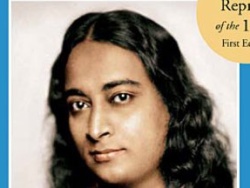
As Paramhansa Yogananda said, “Desires are ever fed but never satisfied.” Unfulfilled desires lead to anger, irritation, depression, stress, anxiety, and constant worry over whether the desires will ever be fulfilled. They keep us living in a future forever slipping away like desert sand.
At the root of most harmful emotions is the desire for things to be different from the way they are. When we learn to accept life as it is, we can remain even-minded and cheerful all the time.
Take a few moments to introspect (only a little will suffice!), and you’ll notice how many times throughout the day, you wish for things to be different. “I wish I could sleep a little longer today.” “Why does the traffic have to be so bad every day? I wish I could live in the mountains away from all this!” “Why doesn’t the president change his international policy for our country’s benefit?” Our constant wish for things to be different keeps us forever discontent.
Emotional Mastery
While cultivating acceptance is essential, there’s another profound key to managing emotional turbulence. As I mentioned earlier, our emotions are deeply connected to the upward and downward movement of energy in the astral spine—an inner current that subtly impacts our breath, posture, and mental state. When this energy flows upward, we feel uplifted, calm, and expansive. When it moves downward, our mood plummets, and life feels heavy.
The ancient technique of Kriya Yoga is par excellence to achieve that end. It gives you direct control over the energy in your spine and brings you to a state of inner balance and harmony.
To arrive at a state of emotional equilibrium, where the waves of emotions subside completely, we need to neutralize the upward and downward flow of energy in the spine. Thus, you will no longer be thrust helplessly between positive and negative emotions.
The ancient technique of Kriya Yoga is par excellence to achieve that end. It gives you direct control over the energy in your spine and brings you to a state of inner balance and harmony. Most people have little control over how they react to life. They believe their reactions should naturally follow their circumstances. But yogic teachings say the opposite.
As Yogananda once said, “Circumstances are neutral. It’s your reaction to them that makes them positive or negative.”
As you learn to control your energy using a powerful tool like Kriya Yoga, you can react positively to even the most negative outer circumstance. For instance, you might find the power in yourself to respond kindly when insulted, or work with greater energy when faced with a challenge. Eventually, with regular practice, you can rise above all reactions.
Even a little progress in this direction will start freeing you from attachments and desires, for it is only our reactions to the world that give rise to them in the first place. Through the practice of Kriya Yoga, we can become masters of our energy rather than puppets of life’s circumstances. We find then that our enjoyment of life does not depend on external events, and we learn to find happiness in the only place we’ll ever get it—within ourselves.
The more we learn to work with this energy—through our attunement, meditation, and other spiritual practices, the more we can calm and steady the waves on the surface of our awareness. From a centered and calm state of awareness, anchored by inner awareness, we acquire the ability to manage and control our emotional states—not by escaping them, but by rising above them.
![]()
Tyagi Shivendra
Tyagi Shivendra is a Kriyaban and an Ananda meditation teacher, serving full-time at Ananda Delhi. He leads meditations, classes, kirtans, and other spiritual activities. Beyond the ashram, he works with corporations, schools, and universities to promote holistic well-being. A graduate of Shri Ram College of Commerce, he has founded and supported ventures across education, retail, and technology. He blogs on various online platforms and is dedicated to sharing Yogananda’s teachings with all truth-seeking souls.